

August 28, 2026
EAST WINDSOR, CT (August 28, 2026) – In early August, Fresh River Healthcare announced the celebration of its 50th anniversary at 96 Prospect Hill Road in East Windsor. As the center continues looking back at five decades in the community, a remarkably well-preserved brochure offers a glimpse of what residents and visitors would have encountered there in 1976.
At the time, the center was known as Prospect Hill Rehabilitation Center, described on the cover simply as a “skilled nursing and rest home facility.” The brochure is a time capsule of long-term care in the mid-1970s—from the décor and furnishings to the uniforms worn by staff. But it also provides a detailed tour of the building and a picture of what everyday life at Prospect Hill was intended to be like. Welcome to Prospect Hill
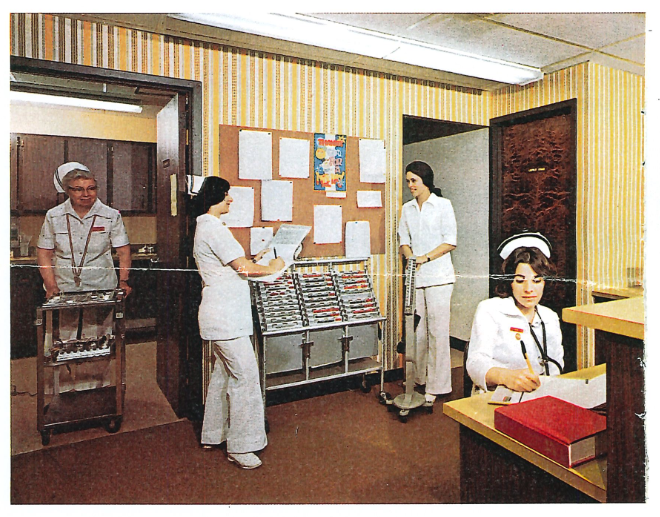
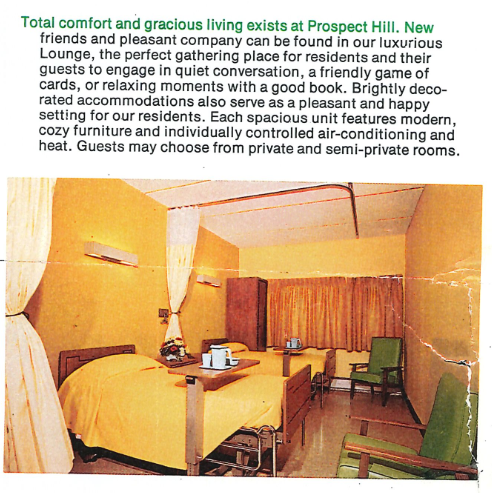
The brochure opens by welcoming prospective residents to what it describes as a “quiet, joy setting,” with an emphasis on comfort and personalized care. Photographs show a nurses’ station staffed by nurses in traditional white uniforms and a resident room decorated in unmistakably 1970s shades of gold and orange. Residents could choose private or semi-private accommodations.
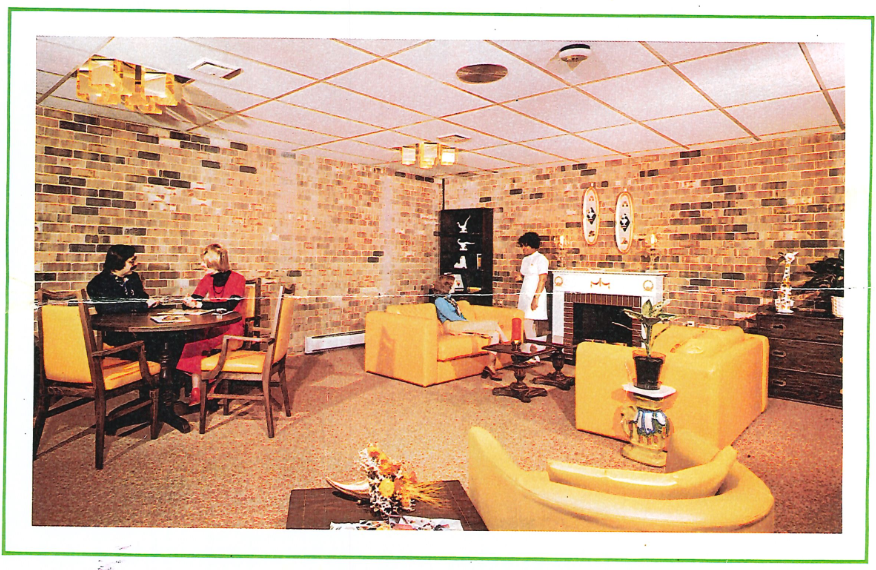
The brochure emphasized the social side of living at Prospect Hill as much as the clinical one. It described lounges throughout the center where residents could gather with friends, watch television, play games or simply have a conversation. One surviving photograph captures that atmosphere particularly well: a large lounge with exposed brick walls, low upholstered couches and chairs, small tables and a fireplace.
It is difficult to imagine a more distinctly 1970s room.
Dining was clearly an important part of the Prospect Hill experience. The brochure described dining as “always a pleasure” and showed a formal dining room complete with tablecloths, china, floral centerpieces and place settings. Residents could choose from a varied menu, with special diets available when required. The room itself featured exposed brick, upholstered dining chairs and the warm earth tones that appear throughout the original center.
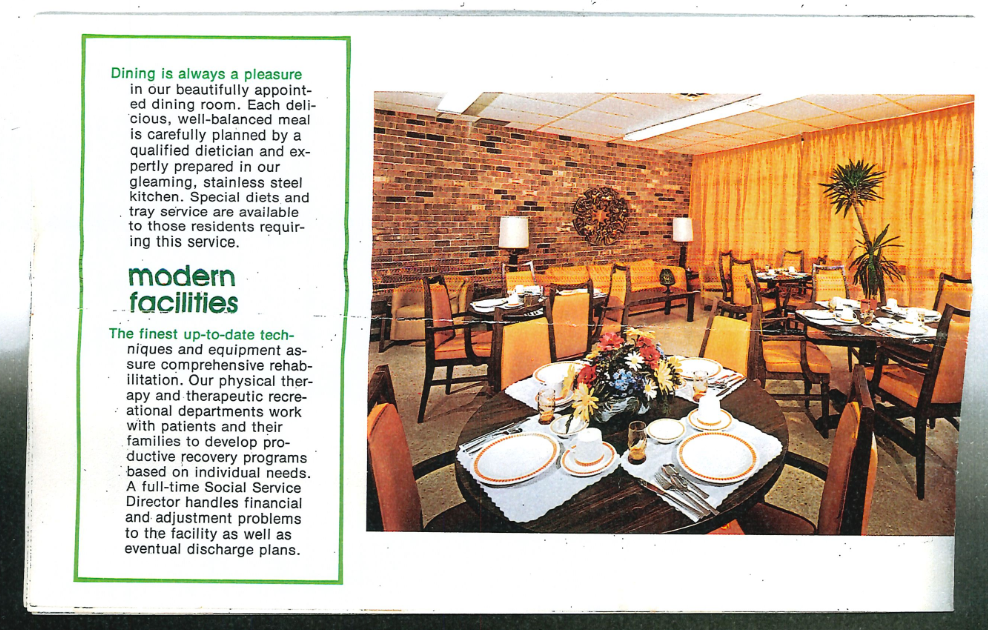
Another photograph shows the center’s kitchen in full operation, while others show residents gathered together over meals. The brochure’s description suggests that mealtime was intended to be both a dining experience and a social occasion—something to look forward to during the day.
Prospect Hill’s recreation program also gets significant attention in the original brochure. Residents were encouraged to remain active, with indoor and outdoor programs available. The brochure specifically mentions the beauty and barber shop as a gathering place where residents could “visit and keep active with a wide variety of indoor and outdoor recreational programs.” Photographs show residents engaged in activities together and enjoying the center’s outdoor patio.
The patio appears to have been a particularly popular gathering place. The brochure describes residents sitting outside, visiting with friends and relatives, relaxing or strolling along the landscaped grounds.
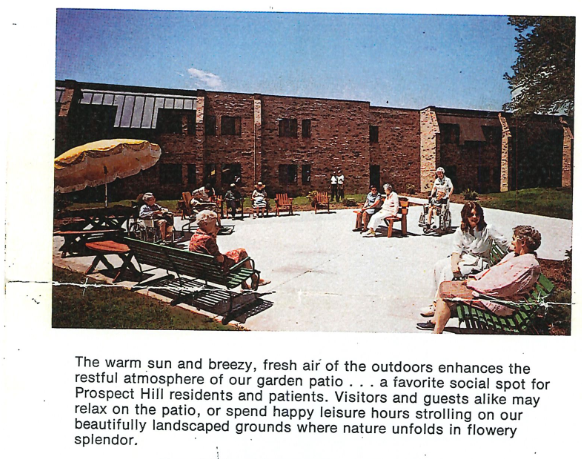
The emphasis throughout is not simply on keeping residents occupied, but on creating opportunities to socialize. Some of the most interesting photographs show what rehabilitation looked like 50 years ago. The rehabilitation area included equipment that would look quite different from what therapists use today. Photographs show residents working with staff on parallel bars and other therapy equipment, with nurses and therapists close by. The brochure says the center made “every effort to restore guests to their highest degree of independence and self care.”
Physical therapy was only part of that effort. Prospect Hill advertised physical, occupational and speech therapy, along with restorative nursing and other services intended to help residents maintain or regain independence.
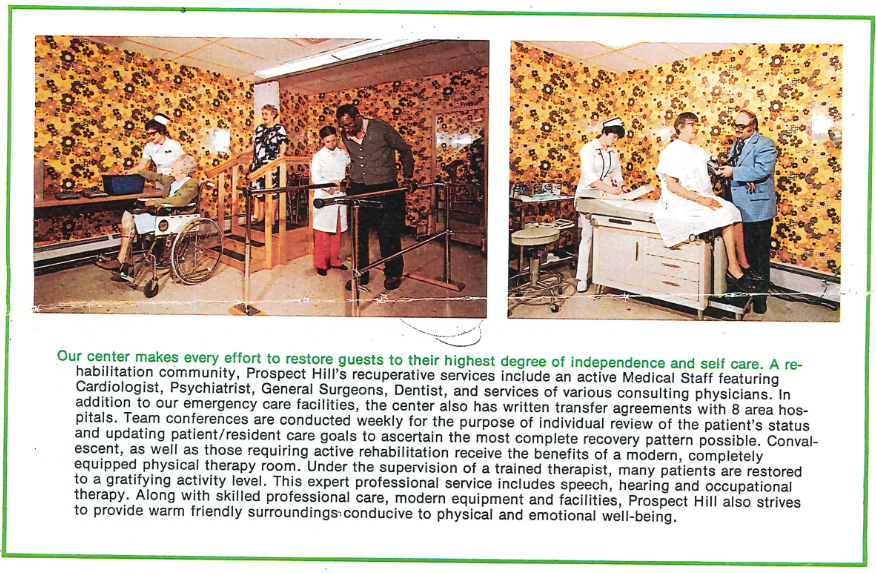
Clinical care was, of course, at the center of the operation. Another photograph shows nurses at work at the center’s nursing station. The white uniforms and nursing caps immediately place the image in another era. The brochure described nursing care as being available “around the clock,” supported by ongoing education for staff and regular review of care procedures.
For East Windsor residents who know the building today, perhaps the most interesting image is the exterior. The brick building at 96 Prospect Hill Road is immediately recognizable. Yet the cars in the parking lot, landscaping, signage and other details clearly belong to another time. The center itself may be familiar, but the world surrounding it was very different.
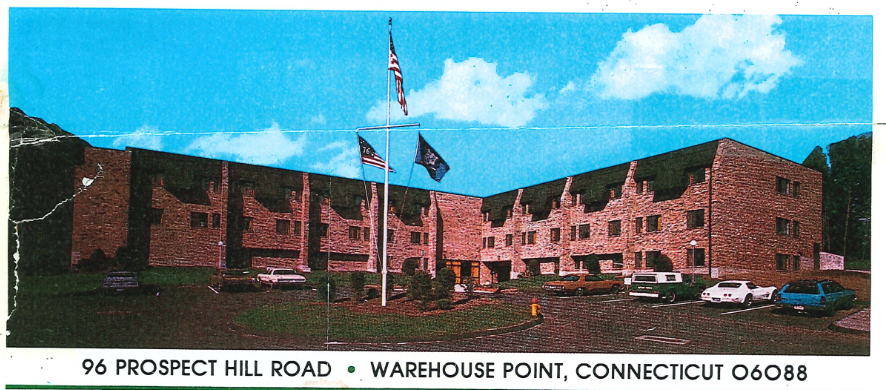
Taken together, the photographs provide something that dates and ownership records cannot: a sense of what it actually looked and felt like to walk through the doors of 96 Prospect Hill Road 50 years ago. The furniture has changed. The nurses’ caps are gone. The rehabilitation equipment has been replaced many times over. And few people would choose some of the wallpaper today. But for former residents, families and employees, some of these photographs may bring back very specific memories.
As part of its 50th anniversary, the center is collecting photographs, documents and stories connected to Prospect Hill Rehabilitation Center, Prospect Hill Nursing Home, Kettle Brook Care Center and Fresh River Healthcare. Anyone with photographs, memorabilia, stories or knowledge of the center’s history is encouraged to contact iCare Health Network at moc.nheraci@ofni. Fresh River will continue sharing pieces of its history leading up to its planned 50th anniversary celebration in late September.